Boxes by style: rigid
Custom collapsible rigid boxes
A collapsible rigid box looks and feels like an assembled magnetic box but arrives flat. Wrapped greyboard panels are joined by paper hinges, and the walls fold up and lock with magnets or adhesive strips when you pack. It cuts freight and storage space on larger runs while keeping the rigid presentation. This guide covers construction, strength, uses, limits and what to specify. Orders start at 50 boxes.
- Family
- Rigid
- Minimum order
- 50 boxes
- Sizing
- Made to your dimensions
Construction
How it is built
Panels joined by paper hinges
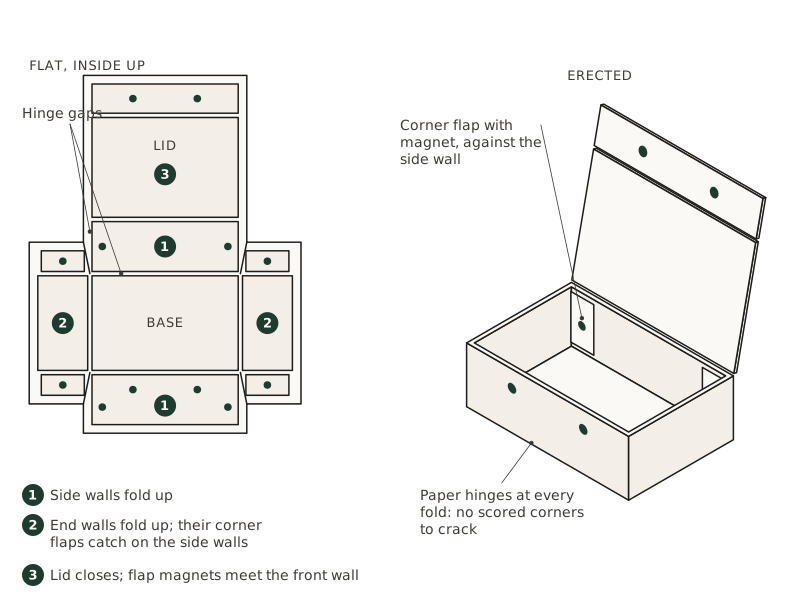
Instead of a tray formed from one scored board, the box is a set of separate greyboard panels, base, side walls, end walls, back, lid and flap, laid on a single wrap sheet with small gaps between them. Each gap becomes a hinge, bridged by the wrap outside and the liner inside, so the whole box folds flat and opens back into shape. There are no scored corners in the board to crack as the box is folded.
How the walls lock
The long side walls fold up from the base, and the end walls then fold in against them. The ends are held in one of two ways: by small magnets in the end-wall flaps that catch magnets or steel in the side walls, so the box can be collapsed again; or by pre-applied double-sided adhesive strips that are peeled and pressed at first assembly, giving a stiffer box that stays assembled. Some designs also tuck wrapped flaps under a loose base platform to square the walls.
The lid
Most collapsible boxes have a magnetic flap lid that continues from the back wall and closes onto magnets in the front wall, exactly as on a fixed magnetic closure box. Collapsible lid and base versions exist, with the lid made as a second folding tray, but the flap lid is the common form because it keeps the box in one piece.
Stiffness and bracing
A collapsible box is slightly less rigid than a fixed box of the same board, because its corners are hinged rather than stayed and glued solid. We compensate with board gauge and panel design: 2 mm or heavier greyboard is typical for most sizes, and a snug base platform or insert braces the walls once the box is loaded, which is when stiffness matters most.
Opening and closing
How it opens and closes
Opening
Once assembled, it opens like any magnetic closure box: lift the front flap against the magnets and the lid swings back on its paper hinge, showing the whole interior. The very first opening happens at your packing bench, when the flat box is unfolded: raise the side walls, fold in the end walls until the magnets catch or the adhesive strips are pressed home, and the box stands up with its lid ready to close.
Closing
The lid closes with a click as the flap magnets meet the front wall. To collapse a magnetic-lock box again, release the end walls and fold the panels flat in reverse order; adhesive-lock boxes stay assembled once stuck. As with any hinged rigid box, the magnetic lid is not a transit seal, so boxes that are posted are banded, sealed or packed in an outer carton.
Best for
Where collapsible rigid boxes work best
Subscription and e-commerce presentation
Stored flat until each dispatch, then assembled and packed inside a postal box.
Corporate gifting campaigns
Large quantities stored flat before a campaign and assembled as each gift is packed.
Apparel and accessories
Wide, shallow boxes for folded garments where rigid feel matters but volumes are high.
Cosmetics gift sets
Seasonal sets packed in batches, with a board insert bracing the walls.
Event and launch kits
Kits packed at a venue or by a fulfilment partner, where delivery and storage space is limited.
Reusable storage boxes
Magnetic-lock versions that customers can fold flat and put back together when needed.
Advantages and limitations
Strengths, and where it falls short
Advantages
- Arrives and stores flat, taking a fraction of the space of assembled rigid boxes, which reduces freight volume and warehouse space.
- Keeps the look and feel of a wrapped rigid box, including the magnetic flap lid.
- Takes all rigid wraps and finishes: printed art paper, speciality papers, foil blocking, debossing, spot UV and all three laminations.
- Magnetic-lock versions can be collapsed and reused by the customer.
- Makes a larger run practical to receive and hold in stock without giving up floor space.
Limitations
- Slightly less rigid than a fixed box, particularly at the corners and on large sizes; an insert or base platform usually braces it.
- Needs assembling at packing, which adds a step and a little time per box compared with a box that arrives ready.
- Hinge lines and small gaps at the corners are visible on close inspection; a fixed box has cleaner, sharper corners.
- More magnets or adhesive strips than a fixed box, which adds component cost and makes recycling harder.
- Very small boxes gain little from flat delivery, so a fixed rigid construction is usually the better choice for them.
Materials, printing and finishes
What it is made from and how it is decorated
Materials
Greyboard (chipboard)
Typically 1.5–3 mm, with 2 mm or more common because the walls are only braced once the box is loaded.
Printed art paper wrap
The wrap is also the hinge material, so a coated art paper printed in CMYK or Pantone and laminated is the usual choice; lamination strengthens the hinges.
Speciality papers
Textured and coloured-through papers can be used, but the paper must be strong enough to act as a hinge through repeated folding; we check this against your specification.
Magnets and adhesive strips
Hidden disc magnets in the lid flap and end walls, or pre-applied double-sided adhesive strips with a peel-off backing.
Liner paper
Covers the inside panels and hinge gaps, plain or printed with a message or pattern.
Printing
Because the box is made from one continuous wrap, the artwork is a single flat layout on our dieline, with the panels separated by hinge gaps and surrounded by turn-ins. Anything that crosses a hinge will fold, so logos and text sit inside panels rather than across folds. Inside printing is on the liner and is seen as soon as the box is unfolded, which makes it useful for packing instructions as well as brand messages. Litho is used for most runs and digital print for very short ones.
Finishes
Lamination
Matt, gloss or soft-touch; lamination also toughens the wrap at the hinges, and it is included as standard.
Foil blocking
On the lid and flap, applied to the wrap before it goes on the board and kept clear of hinge lines.
Embossing and debossing
A debossed logo on the lid holds well; avoid either finish across a hinge.
Spot UV
Gloss detail over matt or soft-touch lamination on the lid.
Inserts, shipping and packing
Practicalities
Inserts
An insert matters more in a collapsible box than in a fixed one, because it braces the walls once they are folded up. A wrapped greyboard or card platform that fits the base snugly holds the walls square; EVA or foam cut to the product does the same for fragile items; and a folding card insert can be delivered flat alongside the box. Specify the insert with the box so the two are sized together, and so the insert does not stop the box folding flat if it is to be stored with the box.
Shipping
Flat delivery is the reason to choose this style. Collapsible boxes arrive flat, stacked in outer cartons, and take a small fraction of the volume of assembled rigid boxes, which makes larger runs practical to receive and store. Once packed, they still need an outer courier carton or postal box for dispatch, like any rigid box. Delivery is included on every order. Your quotation confirms the delivery address and timing.
Packing and assembly
Assembly is quick by hand once packers are familiar with it: unfold, raise the walls, lock the ends, fit the insert, load the product and close the lid. Adhesive strips need firm, even pressure to bond. For a large campaign, plan a short assembly stage before packing, or assemble in batches ahead of dispatch. Collapsible boxes are not designed for automatic erecting lines, so they suit hand packing.
Alternatives
When another style does the job better
Box style
Magnetic closure boxes
The fixed version, supplied assembled, with stiffer corners and cleaner edges. Choose it for smaller runs or where every corner must be perfect.
Compare this styleBox style
Roll-end tuck front mailer boxes
A printed corrugated mailer that arrives flat, folds without glue and travels as the outer box. Choose it when the box is the transit box.
Compare this styleBox style
Corrugated lid and base boxes
A two-piece box in printed corrugated, lighter and robust in the post. Choose it when a lift-off lid suits the unboxing better than a hinged flap.
Compare this styleBox style
Book-style boxes
Choose it for slim presentation boxes that open sideways like a book and are delivered assembled.
Compare this style
- Internal dimensions (length × width × depth) and the weight of the contents.
- Lock type: magnetic end walls, which can be collapsed again, or adhesive strips, which are permanent.
- Lid: magnetic flap lid or a separate lid and base.
- Wrap and liner, including whether the inside is printed, in CMYK or Pantone.
- Finishes and their positions, kept clear of hinge lines.
- Insert type, and whether it should also be delivered flat.
- Quantity (from 50 boxes), your required delivery date, and where the boxes will be stored and packed.
Finished work
Collapsible rigid boxes we have made
Collapsible rigid boxes Collapsible rigid boxes Collapsible rigid boxes
Collapsible rigid boxes questions
Questions buyers ask
Anything not covered here, put it in the notes on your quote and we will answer it directly.
Ask on your quoteWhat is a collapsible rigid box?
It is a rigid box made from wrapped greyboard panels joined by paper hinges, so it arrives flat and folds up into a solid box at packing. Most have a magnetic flap lid, and the walls lock with magnets or adhesive strips.
Is a collapsible box as strong as a fixed rigid box?
Nearly, once assembled and loaded, but not quite. Hinged corners are less stiff than glued ones, so we use a heavier board and usually a base platform or insert to brace the walls. For very heavy contents, a fixed box is the safer choice.
How are collapsible boxes assembled?
Unfold the flat box, raise the side walls, fold in the end walls until the magnets catch or the adhesive strips are pressed, then fit the insert. It takes moments once your team has done a few, with no tools.
Can a collapsible box be folded flat again?
Yes, if it uses magnetic end walls: release them and fold the panels flat. Boxes locked with adhesive strips are designed to stay assembled once stuck.
Is a foldable box the same as a collapsible rigid box?
Foldable box is sometimes used for folding cartons as well. We use collapsible rigid box for the wrapped greyboard construction described here; a folding carton is a single sheet of lighter board, a different product with a different feel.
Can I post a collapsible box as it is?
No. Like any rigid box, it needs an outer courier carton or postal box, because the magnetic lid is not a transit seal and the wrap would scuff in a parcel network.
What is the minimum order for collapsible rigid boxes?
The minimum order is 50 boxes. Flat delivery makes larger quantities easier to store, so it is worth asking for two or three quantities on your quotation.
How long do collapsible boxes take to make?
Panels are cut, laid on the wrap, lined, fitted with magnets or adhesive strips and checked, partly by hand, and finishes add a step. Tell us your required delivery date and our team will confirm whether the timing is achievable.
Ready to specify your packaging?
Our team replies during business hours, 10:00–18:00 UK time.