Folding cartons · pillow box
Custom Pillow Boxes
A pillow box is a small folding carton with curved ends that press closed, giving a soft, pillow-like shape. It is cut from one piece of board, glued along one seam and delivered completely flat. Buyers use it for light gifts, jewellery, accessories, favours and samples, where the shape does the presenting. Made to your size and artwork from 50 boxes.
- Family
- Folding carton
- Minimum order
- 50 boxes
- Sizing
- Made to your dimensions
Construction
How it is built
One blank, one seam
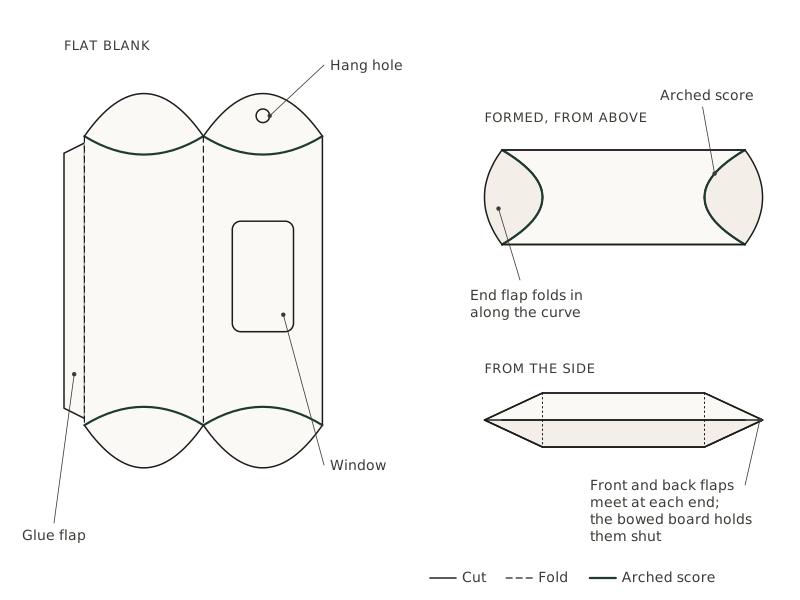
A pillow box is die-cut from a single sheet of board with a glue flap along one long edge. The folder-gluer bonds the flap to make a flattened tube, so the box arrives as a flat piece only a few board thicknesses deep. There are no separate lids, dust flaps or tucks; the ends are part of the body panels.
Curved scores
The defining feature is at each end. Instead of straight fold lines, the cutting forme presses curved (arched) scores into the board. When the tube is squeezed, the body bows outwards and each end flap folds inwards along its curve. The arched flaps from the front and back panels meet in the middle, forming the rounded, closed end that gives the box its name.
Board and curve depth
Curved scores need board that bends along an arc without cracking. Folding boxboard and SBS of roughly 300–400 gsm work well, as does kraft. The depth of the curve sets how much the box bulges: a shallow curve makes a slim pillow for cards and scarves, a deeper curve gives room for a lipstick or a small candle. Very thick board or micro-flute makes the curves hard to close neatly.
Features cut in the same pass
Because the whole box is one blank, extras are added in the same cut: a die-cut window, a hang hole for peg display, slots for a ribbon, or a carry handle extended from one panel. None of these needs a separate component or tool, which keeps a pillow box economical even with a few features added.
Opening and closing
How it opens and closes
Opening
The customer presses gently on the curved end, or pulls one end flap outwards by its edge; the arched flap flips back and the end opens. The item then slides out of the end. Some designs add a small thumb notch or a tab on one flap so the opening is obvious, which helps when the box is a gift and the recipient has not seen one before.
Closing
Squeeze the sides so the body bows, then press each end flap inwards along its curve until the two halves meet. The tension in the bowed board holds the ends shut. That is secure enough for light contents; for gifts that must not open, add a sticker, a ribbon through a slot or a narrow belly band.
Best for
Where pillow boxes work best
Jewellery and small accessories
Earrings, bracelets and hair accessories on a slotted card, in a box that feels like a gift.
Gift cards, vouchers and tickets
A slim pillow with a shallow curve turns a card into a presented gift.
Event and wedding favours
Sweets, seeds or small keepsakes, filled by hand shortly before the event.
Cosmetic minis and samples
Lip balms, trial sizes and sachets handed out with orders or at events.
Scarves, ties and soft goods
Folded soft items that fill the curved profile without needing an insert.
Retail add-ons
Small impulse items with a hang hole for peg display near the till.
Advantages and limitations
Strengths, and where it falls short
Advantages
- A distinctive shape that reads as a gift without extra decoration.
- One blank and one glue seam, so it is economical to produce.
- Delivered completely flat, taking very little storage space before use.
- Closes without glue, tape or tuck flaps; hand filling is quick.
- Windows, hang holes, handles and ribbon slots are cut in the same pass.
Limitations
- Suits light items only; the curved ends are not designed to carry weight.
- The interior tapers towards the ends, so the usable space is smaller than the outside size suggests and boxy items waste room.
- Does not stack well, and the curved profile needs protecting inside a mailer or outer carton for courier delivery.
- Curved scores can crack on heavy, dark-printed or very thick board, so board and lamination are chosen with that in mind.
- Very large pillow boxes lose their tension and shape; the style works best at small to medium sizes.
Materials, printing and finishes
What it is made from and how it is decorated
Materials
Folding boxboard (FBB)
300–350 gsm gives a crisp curve and a bright print surface for most sizes.
Solid bleached board (SBS)
White through its thickness, so the inside and cut edges look clean when the box is opened.
Kraft board
Brown or white-lined kraft for natural and handmade ranges; it takes curved scores well.
Metallised and speciality boards
Silver metallised board or textured papers laminated to board for a premium effect without extra finishing.
Printing
Pillow boxes are printed by litho or digital in CMYK, with Pantone spot colours for brand colours. The artwork wraps around a curved body, so the key panel is the flat face between the two arcs; text placed too close to the curved scores distorts as the ends fold in. The inside can be printed for a pattern or message that is seen when the end opens.
Finishes
Soft-touch lamination
A velvety surface that suits the soft shape; matt and gloss lamination are also available. Lamination is free on every order.
Foil blocking
A foil logo on the flat face, the most common upgrade for jewellery and favours.
Spot UV
Gloss detail over a matt or soft-touch face for contrast.
Embossing and debossing
Raised or recessed branding in the centre of the flat face, clear of the curved scores.
Window patching
A small window, open or film-patched, showing a piece of jewellery or a colour.
Inserts, shipping and packing
Practicalities
Inserts
Most pillow boxes carry soft or flat items that need no insert. For jewellery, a small slotted card holds earrings or a pendant in place; for a lipstick or small bottle, a folded card cradle stops it sliding into the curved end. Tissue or paper fill suits favours. Any insert has to fit the tapered interior, so send the item and we will size the box and insert around it.
Shipping
Pillow boxes are delivered flat, glued at the seam, in bundles inside corrugated courier cartons, and take up very little room until they are used. Delivery is included on every order. Your quotation confirms the delivery address and timing. Filled pillow boxes sent on to customers should travel inside a mailer box, where they are protected from crushing.
Packing and assembly
Pillow boxes are packed by hand: the packer squeezes the flat tube open, closes one end, drops in the item and closes the other. It takes seconds and needs no tools, glue or tape. For events and gifting they are often filled at the last moment, because they store flat until then.
Alternatives
When another style does the job better
Box style
Sleeve and Slipcase Boxes
A sleeve over a small tray gives a similar gift feel with a flat base that stands on a shelf.
Compare this styleBox style
Straight Tuck End Boxes
A square carton for items that are too heavy or too boxy for a pillow shape.
Compare this styleBox style
Gable and Handle Boxes
When the gift needs to be carried by hand and holds a little more.
Compare this style
- The item and its dimensions, or send one so we can size the curve depth.
- Approximate pillow box size, if you already have one in mind.
- Quantity, from 50 boxes.
- Board: folding boxboard, SBS, kraft or a metallised or speciality board.
- Print, inside print and finishes.
- Extras: window, hang hole, ribbon slots or handle.
- Your required delivery date.
Pillow Boxes questions
Questions buyers ask
Anything not covered here, put it in the notes on your quote and we will answer it directly.
Ask on your quoteWhat can I put in a pillow box?
Small, light items that are flat or soft suit it best: jewellery, gift cards, scarves, cosmetic minis, sweets and favours. Heavy or boxy products are better in a tuck end or lid and base box.
How big can a pillow box be?
They work best from gift-card size up to around the size of a paperback book. Beyond that the curves lose tension and the box loses its shape. Tell us the item and we will set the size and curve depth to suit.
Do pillow boxes need glue to close?
No. The ends close by pressing the curved flaps in, and the tension in the board holds them. Add a sticker or ribbon if the box must stay shut.
Can I add a window, handle or hang hole?
Yes. All three are cut from the same blank in the same pass, so they need no separate component.
Can I post a pillow box on its own?
It is not designed for that. The curved profile and light board are for presentation, so pack filled pillow boxes inside a mailer box for delivery.
What board works best for pillow boxes?
Folding boxboard or SBS of roughly 300–350 gsm gives a clean curve and good print; kraft suits natural ranges. Very thick board makes the curved ends hard to close.
What is the minimum order for pillow boxes?
The minimum order is 50 boxes. Free Shipping, Free Lamination and No Die Charges are standard on every order. Ask about sample options when you request your quotation.
Ready to specify your packaging?
Our team replies during business hours, 10:00–18:00 UK time.