Folding cartons and rigid · sleeves and slipcases
Sleeve and Slipcase Boxes
A sleeve is a printed tube of board that slides over a tray, a box or the product itself; a slipcase is a case closed on all but one side, into which a book, box or tray slides. Both come as folding cartons that ship flat, or as rigid greyboard constructions wrapped in printed paper. They brand and present existing packaging, made to your size from 50 boxes.
- Family
- Folding carton
- Minimum order
- 50 boxes
- Sizing
- Made to your dimensions

Construction
How it is built
Carton sleeve
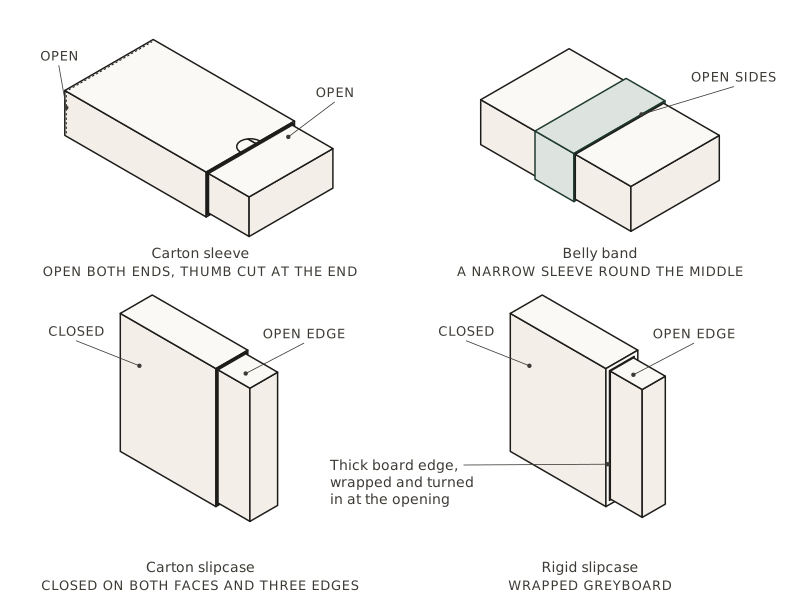
A carton sleeve is a folding carton with no ends: four panels and a glue flap joined at one side seam, delivered flat and opened into a tube. It slides over a tray, a lid and base box or the product itself. Thumb cut-outs on the open ends make it easy to push the contents out, and a narrow version that wraps only the middle of a box is usually called a belly band.
Slipcase
A slipcase is closed on both faces and three edges and open on the fourth, like the case a boxed book set slides into. As a folding carton it is die-cut from one blank and glued along its side and bottom seams, then delivered flat. As a rigid slipcase it is built from greyboard panels wrapped in printed paper, with the wrap turned in around the open edge for a clean finish.
Rigid sleeve and tray
A rigid sleeve is a four-sided greyboard tube wrapped in printed or speciality paper, usually paired with a rigid or carton tray. Rigid sleeves and slipcases are delivered made up, because greyboard does not fold flat. When a tray slides inside a rigid sleeve with a ribbon or thumb cut to pull it out, the construction becomes a drawer box, which has its own guide.
Fit and friction
A sleeve holds only by friction, so the fit is everything. We size a carton sleeve to the outside of the tray or box plus a small allowance for board thickness, typically a millimetre or two in each direction, and a rigid sleeve closer still. Too tight and the contents stick; too loose and they slide out when the pack is tilted. Sizing from a physical sample of the inner tray or box is far more reliable than sizing from a drawing.
Board by variant
Carton sleeves and slipcases use 300–400 gsm folding boxboard, SBS or kraft; sleeves over deep or heavy trays may use micro-flute. Rigid sleeves and slipcases use greyboard, commonly around 1.5–2 mm, wrapped in printed art paper or a textured speciality paper, with thicker board for large or heavy sets. The choice depends on how much the sleeve is handled and whether it will be kept.
Opening and closing
How it opens and closes
Opening
The contents slide out of the open end. With a sleeve, the customer pushes the tray or box through using the thumb cut-outs, or slides the sleeve off. With a slipcase, the book or box is drawn out by its spine, a finger notch or a ribbon pull. There is no hinge and no catch to release; the reveal is a slow slide rather than a lifted lid, which is much of its appeal.
Closing
Closing is the reverse: the contents slide back in until they sit flush with the open edge, and friction holds them. If the pack will be carried or tilted, plan a way of stopping the contents sliding: a snug fit, a sticker or seal across the open end, a ribbon, or a small locking tab on a carton sleeve.
Best for
Where sleeve and slipcase boxes work best
Food trays and bakery ranges
Printed carton sleeves over plain trays or boxes, so one stock tray serves a whole range with a different sleeve for each product.
Books, boxed sets and stationery
Slipcases for book sets, notebooks, card decks and limited editions that are kept on a shelf.
Apparel and accessories
Sleeves over folded garments, socks, ties and scarves in a tray or lid and base box.
Chocolate and confectionery gifts
A printed sleeve over a plain presentation box, changed for each season or flavour.
Corporate and presentation gifts
Rigid sleeves and slipcases for sets that are given, displayed and kept.
Soap and bath bars
A simple belly band or sleeve around a wrapped bar, showing the product at each end.
Advantages and limitations
Strengths, and where it falls short
Advantages
- The most economical way to brand plain trays, boxes and multipacks: change the sleeve, keep the stock tray.
- Carton sleeves ship flat and slide on in seconds by hand.
- A sliding reveal that feels considered, with no closure hardware.
- Rigid versions give weight and a premium finish for sets that are kept.
- The open ends can show the product or a printed inner box, if you want them to.
- Seasonal and limited-edition designs can run on the same inner packaging.
Limitations
- Friction is the only closure; without a snug fit or a seal, contents can slide out when the pack is tilted.
- A sleeve is not a complete package: the tray, box or wrapper inside does the containing.
- Rigid sleeves and slipcases are delivered made up, so they take more storage and delivery space.
- Fit tolerances are tight, so the inner tray or box should be sampled or measured exactly before production.
- A light carton sleeve over a heavy tray can bow, so the board must suit the tray's weight.
Materials, printing and finishes
What it is made from and how it is decorated
Materials
Folding boxboard (FBB)
Carton sleeves and slipcases at 300–400 gsm, stiff enough to hold their shape over a tray.
Solid bleached board (SBS)
White through its thickness for printed insides and clean cut edges on thumb notches.
Kraft board
Natural brown sleeves for food and craft ranges, often printed in one or two colours.
Greyboard
The core of rigid sleeves and slipcases, commonly around 1.5–2 mm, wrapped in printed paper.
Speciality papers
Textured, linen or coloured wraps for rigid slipcases, where the material carries the branding with a foil block.
Printing
Carton sleeves are printed directly on the board by litho or digital, in CMYK with Pantone spot colours as needed. Rigid sleeves and slipcases have their artwork printed on the wrap paper, which is laminated to the greyboard and turned in around the edges, so the artwork allows extra wrap-around at every edge. The inside of a carton sleeve can be printed, and a rigid slipcase can take a printed liner.
Finishes
Matt, gloss or soft-touch lamination
On a carton sleeve or a rigid wrap, protecting the print where the sleeve is handled most. Lamination is free on every order.
Foil blocking
A foil title or logo on the face of a slipcase or sleeve, often on an uncoated or textured wrap.
Embossing and debossing
Raised or recessed lettering, especially effective on rigid wraps where the greyboard supports a deep impression.
Spot UV
Gloss detail on a matt laminated sleeve for contrast.
Window patching
A die-cut window in a carton sleeve showing the product or a printed inner box beneath.
Inserts, shipping and packing
Practicalities
Inserts
With a sleeve, the inner tray often is the insert: a carton tray, a rigid tray or a die-cut platform that holds the product. For slipcases the contents usually fill the case, but a board spacer or cavity insert can hold several items in place. Tell us what goes inside and we will size the sleeve or slipcase around it, including any tray or insert we supply with it.
Shipping
Carton sleeves and carton slipcases ship flat in bundles inside corrugated courier cartons. Rigid sleeves and slipcases are made up and packed nested or stacked in outer cartons, which takes more room, so allow storage space for them. Delivery is included on every order. Your quotation confirms the delivery address and timing.
Packing and assembly
Carton sleeves are opened into a tube and slid over the tray or box by hand, with no gluing; larger operations can apply them on sleeving equipment. Rigid slipcases have the contents slid in by hand. Always try the fit on a sample first, so packers are not forcing product into a case that is a fraction too tight or chasing contents out of one that is loose.
Alternatives
When another style does the job better
Box style
Drawer Boxes
A rigid sleeve with a sliding tray and pull, for gift packaging that is opened and closed repeatedly.
Compare this styleBox style
Lid and Base Boxes
A full closure on all sides; choose it when the contents must stay put while carried.
Compare this styleBox style
Pillow Boxes
Another light, ship-flat speciality carton for small gifts and accessories.
Compare this styleBox style
Straight Tuck End Boxes
A closed carton for when the product must be fully enclosed on the shelf.
Compare this style
- Carton sleeve, rigid sleeve or slipcase, and what it goes over or holds.
- Exact outside dimensions of the tray, box, book or product it must fit, or send a sample.
- Quantity, from 50 boxes.
- Board or wrap: folding boxboard, kraft, or greyboard with a printed or speciality paper.
- Print and finishes, including thumb cut-outs or a window.
- Whether we supply the tray or insert as well.
- Your required delivery date.
Finished work
Sleeve and Slipcase Boxes we have made
Sleeve and Slipcase Boxes
Sleeve and Slipcase Boxes questions
Questions buyers ask
Anything not covered here, put it in the notes on your quote and we will answer it directly.
Ask on your quoteWhat is the difference between a sleeve and a slipcase?
A sleeve is open at both ends and slides over a tray or box. A slipcase is closed on all sides but one, so the contents slide into it and rest against the closed end, like a book in a case.
Carton or rigid: which should I choose?
Choose a carton sleeve for economy, flat delivery and seasonal changes over stock trays. Choose a rigid sleeve or slipcase when the pack is a keepsake or a premium gift and should feel substantial in the hand.
Will the product slide out of a sleeve?
Not if the fit is right for the pack's use. For packs that are carried or tilted, we add a seal, a locking tab or a tighter fit, and we recommend sizing from a sample of the inner tray or box.
Can you make a sleeve for my existing packaging?
Yes. Send the exact outside dimensions, or better a sample of the box or tray, and we will size the sleeve to it. This is a common way to brand stock packaging without replacing it.
Can you supply the tray as well?
Yes. We can supply a carton or rigid tray made to fit the sleeve, or a die-cut insert for the product, so the whole pack is sized together.
Can a sleeve have a window?
Yes. A die-cut window, open or patched with clear film, shows the product or a printed inner box through the sleeve.
What is the minimum order for sleeves and slipcases?
The minimum order is 50 boxes. Free Shipping, Free Lamination and No Die Charges are standard on every order.
Ready to specify your packaging?
Our team replies during business hours, 10:00–18:00 UK time.